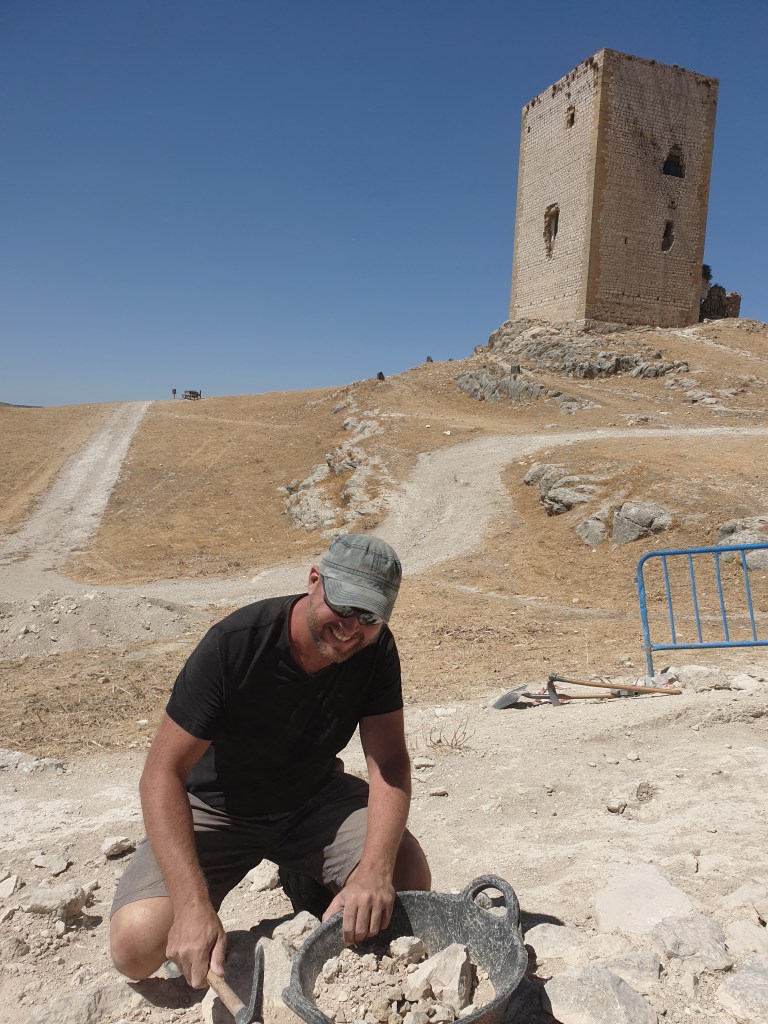
A zooarchaeologist by training, Aleks’ early research was defined by combining his passion for wildlife with an unbridled enthusiasm for the European Middle Ages. He published extensively on the wolf in medieval north-western Europe, and continues to be interested in how humans have co-existed with large carnivores around the world.
His interest in animals expanded to research into broader human impact on past environments, particularly in the frontier societies of medieval Latin Europe where different cultures, languages and religions met, often in the violent context of crusading.
He directed the “Ecology of Crusading” project funded by the European Research Council in 2010-2014, which investigated the environmental impact of the Baltic Crusades. It was the first project of its kind in scale and disciplinary breadth focusing on this formative period in the history of Europe.
He then led the “Landscapes of (Re)Conquest” project funded by the Arts & Humanities Research Council in 2018-2023, which examined the creation of frontier societies in Spain and Pyrenean France, using the lens of the cultural landscape. As with his previous projects, it drew on a broad range of disciplines and archaeological science.
He is currently one of the Principal Investigators on the “Medgreenrev” project funded by the European Research Council in 2023-2029, which is exploring the environmental impact and legacy of conquests and migrations in the Westen Mediterranean across the ‘medieval millennium’.
He is collaborating with the ancient DNA laboratory at the Natural History Museum in London, and is also involved in the MACH (Mauritius Archaeology and Cultural Heritage) project, a collaboration with Stanford University, the University of Mauritius and various other cultural and heritage institutions. He is particularly interested in the environmental impact of colonialism on the islands of the Indian Ocean.