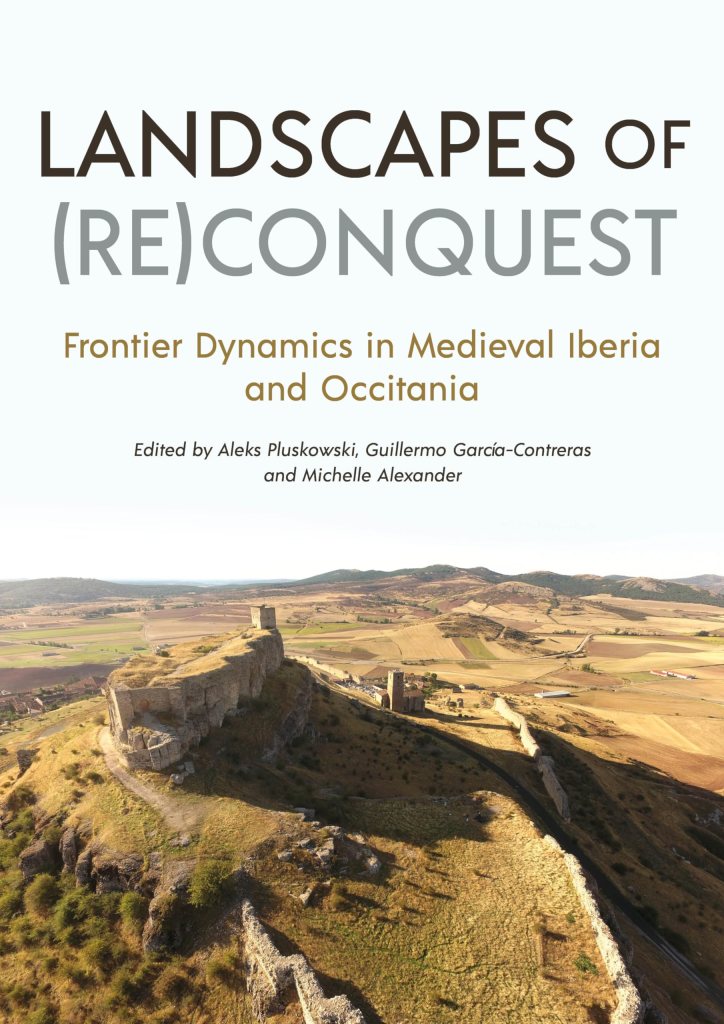
Landscapes of (Re)Conquest
Frontier Dynamics in Medieval Iberia and Occitania
A fresh archaeological and historical approach to the medieval societies of the Western Mediterranean
This book is the outcome of a major research project led by Guillermo Garcia Contreras, Michelle Alexander and myself. It examines the medieval frontiers of southwestern Europe, regions where different states and cultures met, interacted and competed.
In the Middle Ages, frontiers were a normal part of every state. They were not just fixed lines on a map, but shifting zones shaped by contact, conflict, trade and cooperation. In these areas, resident communities encountered newcomers ranging from small groups of elites to larger numbers of migrants from varied social backgrounds. These interactions led to new, blended cultural practices that became a defining feature of frontier societies. Even as political borders moved, the cultural effects of these encounters often endured.
Frontier regions were also places of major change. Political power structures were reorganized, economic networks adapted, and religious institutions expanded or shifted. Frontier authorities invested in both long-established centres and newly founded ones, and the monumental remains of these fortified residences still play a powerful role in how people understand the past. They shape public narratives about identity, the formation of nations, and the history of cultural conflict in these former borderlands.
Adopting the definition of frontiers as both the spaces at the edges of polities and the composite societies resulting from their territorial expansion, this book presents a multi-disciplinary study of their dynamics. Focusing on the western Mediterranean, it draws on case studies of cultural landscapes shaped by two contrasting periods of conquest, regime change and state formation: the Castilian and Aragonese conquests of al-Andalus (Islamic Iberia) and the French annexation of Occitania following the Albigensian Crusade.
Integrating perspectives from settlement and landscape archaeology, geoarchaeology, zooarchaeology, archaeobotany, archaeometallurgy and isotopic analyses, this book provides a new framework for the study of the transformative spaces of medieval frontier societies.
Published by Oxbow in 2025.